
From Garden to Artwork: Painting Flowers From Life
Where Each Painting Begins
Growing the Flowers I Paint
My paintings begin long before I stand at the easel. Each winter, I plan the garden with painting in mind—choosing flowers for their form, color, structure, and the possibilities I imagine they might offer as the season unfolds.
The garden isn't separate from my studio practice. It is where the conversation begins.
From Seed to Garden
Many of the flowers I paint begin as seeds started indoors during the quiet months of late winter. I tend them through spring until they're ready for the garden, then continue observing as each plant establishes itself, grows, and eventually begins to bloom.
By the time I cut the first stem to paint, I've already spent months getting to know my subject.
Choosing Flowers From the Garden
I don't grow flowers to create a predetermined composition. Instead, I walk the garden looking for what catches my attention—a particular curve of a stem, an unusual bloom, or a bud about to open.
What I choose changes from day to day. The garden leads, and I pay attention.
Bringing the Garden Into the Studio
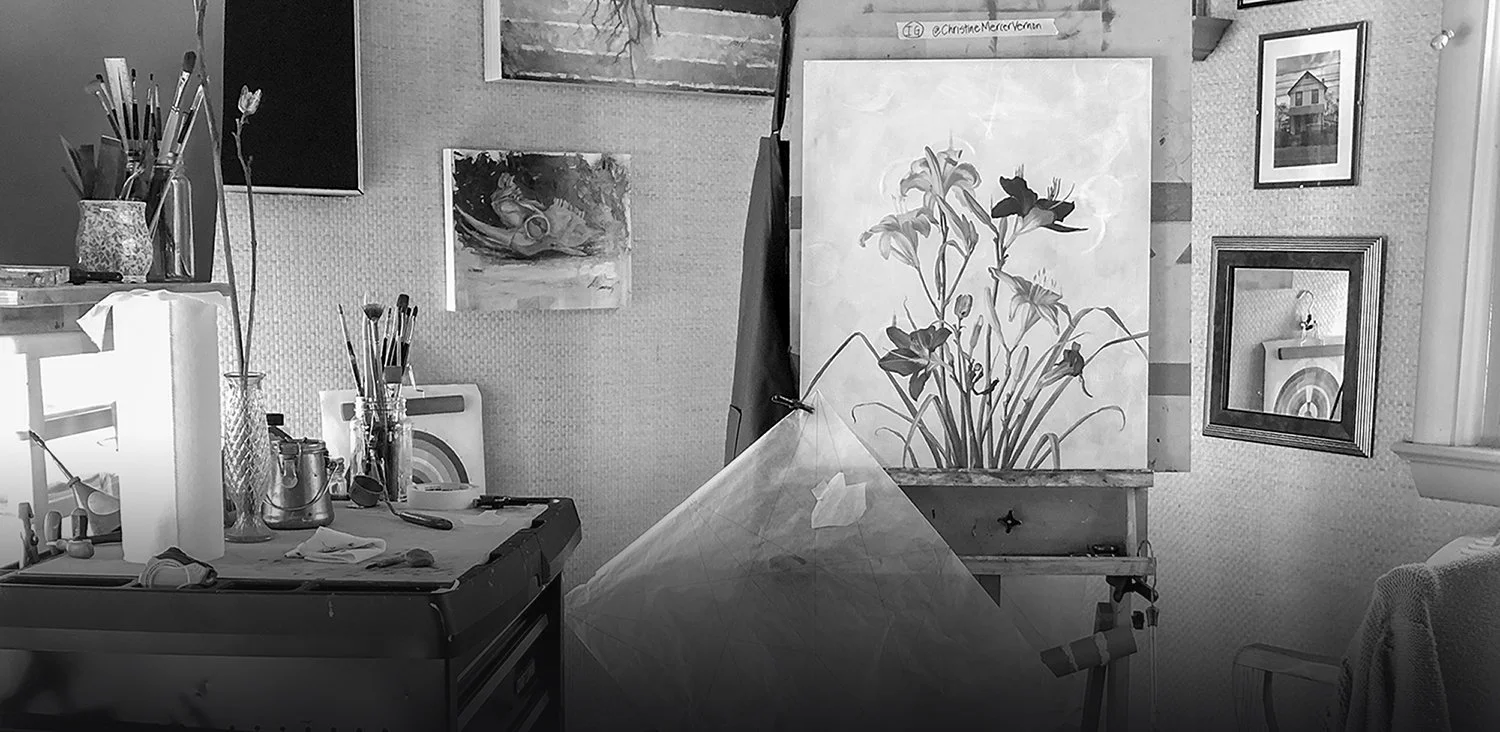
Flowers are cut from the garden and brought directly into my studio, where I paint them from life. I work with only a few stems at a time rather than arranging a finished bouquet, allowing what is blooming in the garden that day to determine what enters the painting next.
The distance between garden and easel is small, and I like to keep it that way.
How the Process Unfolds
Painting Flowers From Life
Painting from life asks me to be completely present with my subject. Flowers are never truly still—buds open, stems move to follow the light, and blooms begin to fade, sometimes within hours.
I can't stop any of it. I can only observe carefully and decide which fleeting moment I want to hold onto in paint.
Building the Composition: One Stem at a Time
I don't arrange flowers into a composition—I allow it to reveal itself over time. Each new stem is considered in relationship to everything already painted, while the harmonic armature provides an underlying structure for balance, movement, and visual rhythm.
The structure is deliberate, even when the finished composition feels organic.
See how I use the Harmonic Armature to compose my paintings →
Observing the Flower's Life Cycle
A single painting may unfold over weeks or months, allowing me to observe the same flower at very different stages of its life. Buds, newly opened blooms, fading petals, and developing seed heads can exist together in a composition even though they never appeared that way in the garden at the same moment.
In this way, the painting becomes a gathering of lived moments—a blooming cycle compressed into a single view.
Adding Insects and Pollinators
In my work, I draw these visitors directly onto the painted panel in graphite. Their quiet gray presence contrasts with the luminous color of the flowers, shifting them from decoration to environmental subtext. They may appear secondary to the flowers, but their role in the story—and in the future of the garden—is anything but.
Discover why I draw insects and pollinators into my paintings →
The longer I spend observing flowers, the more impossible it becomes to separate them from the insects and pollinators that depend on them. Bees, butterflies, spiders, and other small visitors are part of the living ecosystem I witness every day in the garden.
When the Painting Reveals Its Story
I rarely know exactly where a painting is going when I begin. Meaning accumulates slowly through the flowers I choose, the stages of life I observe, the insects that appear, and the relationships that develop as the composition grows.
Eventually, something shifts. What began as quiet observation becomes narrative, and the painting reveals a story I could not have planned at the beginning.
Perhaps that is why I continue to paint this way. I am not simply recording flowers—I am paying attention to what time, nature, and the act of painting might reveal.
See how these moments come together in the finished Floral Paintings →