What is the Harmonic Armature and How I Use It to Paint Flowers from Life
When I paint from life, I build each composition one stem at a time—responding to what’s in front of me in real time. But beneath that intuitive process is a quiet structure guiding every decision. An armature that helps me find structure and balance as I compose, while maintaining the feel of an organic composition.
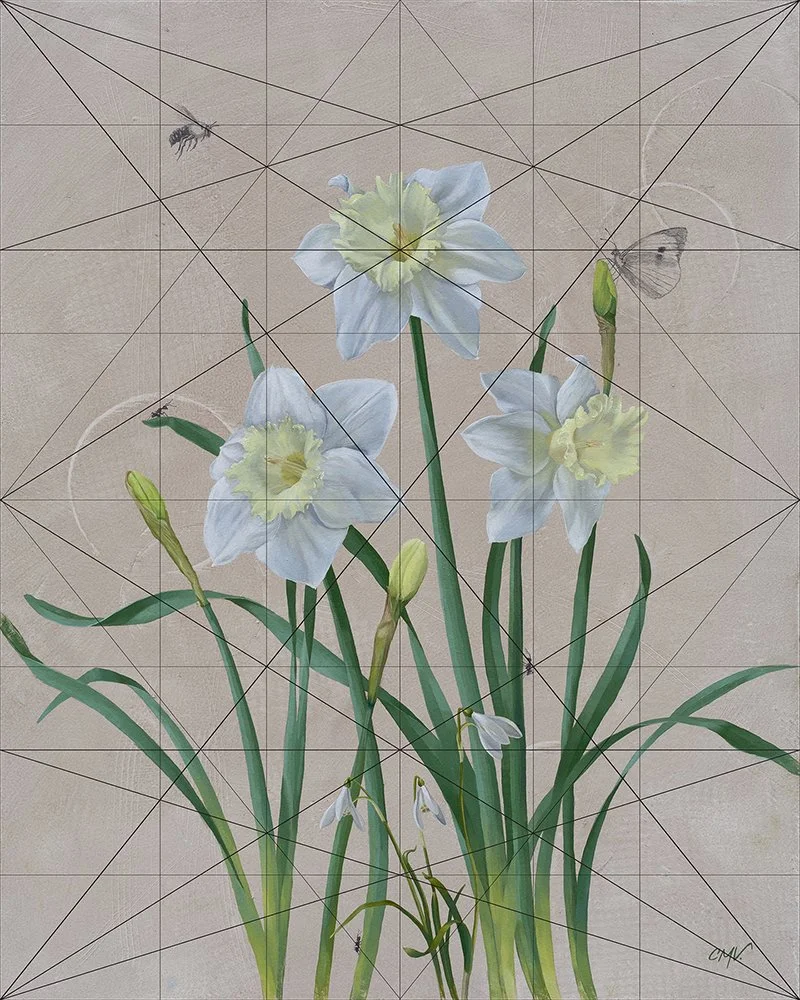
What You’re Not Seeing
This painting, The Arrival of Spring, currently on view in the American Women Artists, Of Mark & Meaning exhibition, was composed using the harmonic armature—a proportional framework that helps guide balance, movement, and placement.
It’s not something you see directly, but it’s something you feel in how the painting holds together. There is immense flexibility in how the armature can be manipulated without falling into a recognizable or repetitive compositional format, such as the rule of thirds—which naturally overlays the armature.
What Is the Harmonic Armature?
The harmonic armature is a compositional grid built from a 14-line combination of verticals, horizontals, and diagonals that divide the surface into dynamic sections. The grid can be expanded further to break down areas of focus into a more intricate structure.
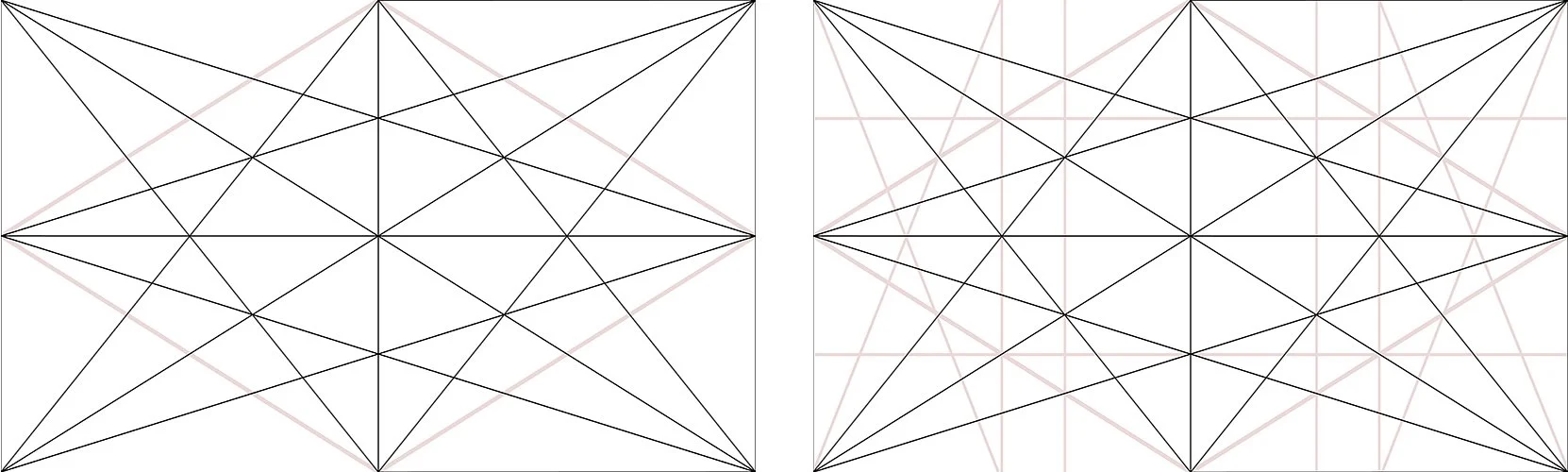
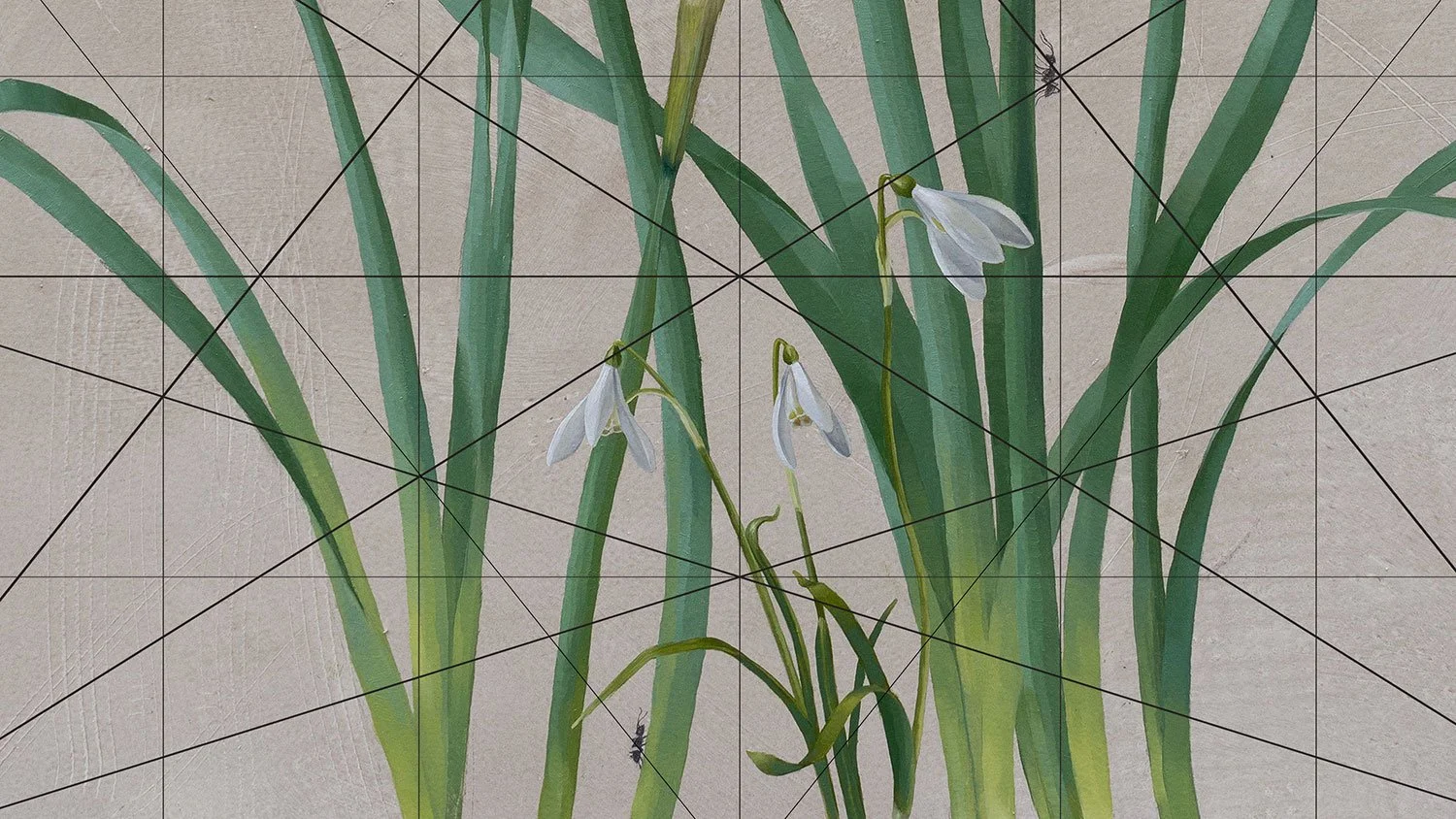
Left: The basic 14-line armature, optionally four lines can be drawn connecting the center point of each side (pink). I begin with the armature both ways. Right: An example of the armature that I expanded for a larger floral painting.
I like to add horizontals and verticals at key intersecting diagonals—areas I naturally gravitate toward in my compositions. However, I don’t use it to force a composition—I use it to support one.
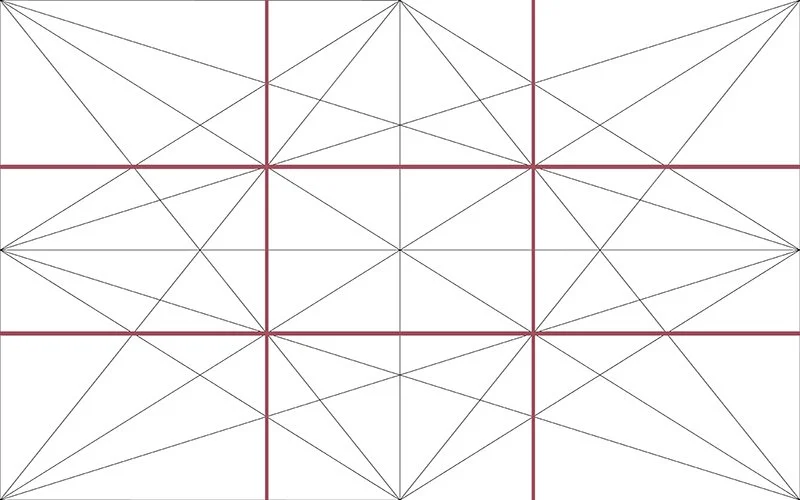
The rule of thirds grid overlaid onto the harmonic armature. The intersections of the the grid fall directly onto the corner to corner diagonal of the armature where multiple diagonal lines converge.
Key Elements of the Harmonic Armature
Creates a structure that supports the natural movement of the eye through a painting
Intersecting lines divide the surface into halves, thirds, and quarters, with specific intersections aligning with the rule of thirds
Encourages compositions that feel balanced without becoming centered or static
Acts as an underlying structure for placing forms with intention rather than guesswork
Can be used simply (with the base 14 lines) or expanded in key areas to refine a composition further
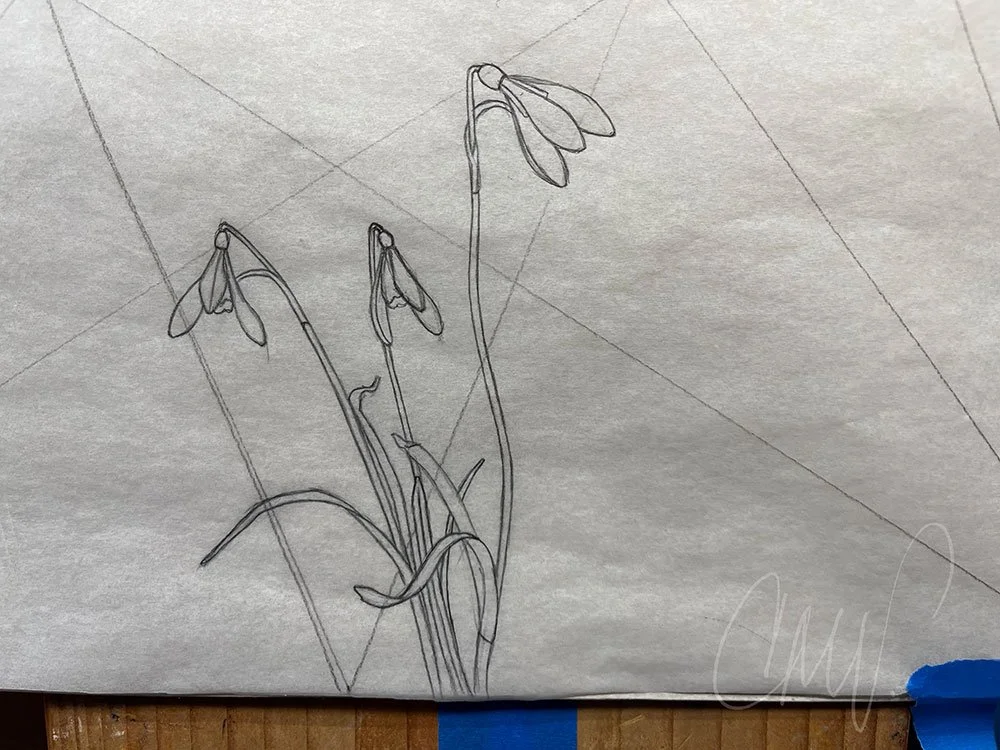
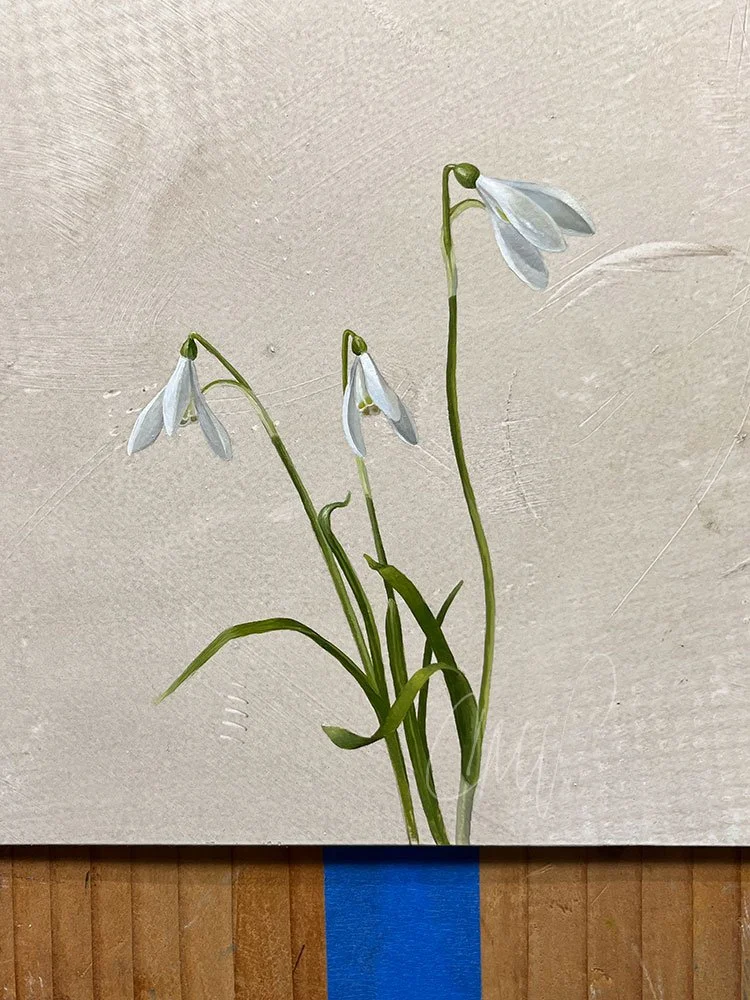
Three spring flowering snowdrops, painted from life.
Structure + Observation
When I paint from life, nothing is fixed. In a matter of hours, a bud can bloom and fade, while light shifts through the studio. The armature allows me to respond intuitively while still building something structurally sound—placing each stem in relationship to the whole as it evolves.
I can determine an area on the panel where I’d like to create focus and use the armature to design it in a way that moves the eye gently through the painting without feeling forced.
Sometimes I will intentionally follow a diagonal; other times, I create small vignettes within triangles formed by intersecting lines. There is no single way to design using the armature, and because of that, I can tailor it to the needs of each painting.
Why It Matters
If I were to paint stems without an underlying structure, compositions would quickly spiral into a confusing mass without a clear focus. A deep understanding of my subject allows me to determine the placement of fully open blooms using the armature—before I even have them.
From there, I build outward as I harvest flowers from the garden.
This is often why a painting feels balanced, even if you don’t know why. The structure isn’t visible—but it quietly guides how your eye moves, where it rests, and how the composition feels organized yet organic.
There are endless ways to compose with the armature, no two paintings will ever feel the same.
Look over my entire collection of floral artworks and you won’t find any two that share the same composition!
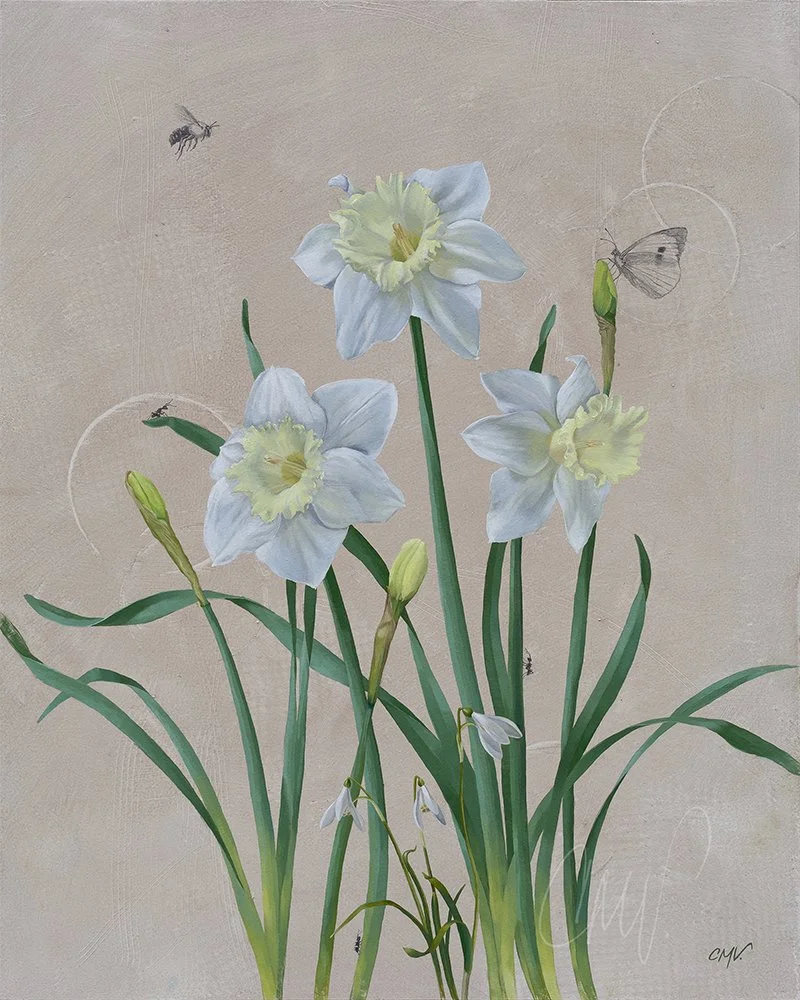
The Arrival of Spring
20×16 inch oil and graphite on ACM
A Quiet Framework
Using the armature, in many ways, mirrors the garden itself. The cut stems I paint represent only a small portion of each plant, while the unseen structure supports what is visible.
What appears chaotic is held together by underlying systems and relationships. Chaos, contained.
The harmonic armature is simply one way I bring that same quiet structure into my work.
What feels effortless is often carefully built.
________________________________________________
From Garden to Artwork → Learn more about my process from seed to painting.
Read more about how I use the armature:
The Harmonic Armature: How I Composed this Rose Peony Painting