Why I Include Insects & Pollinators in My Paintings
Step into a midsummer garden and you’ll find a world humming with life.
In a healthy, chemical-free garden, pollinators flourish—bees ricocheting from bloom to bloom, butterflies drifting like petals on the breeze, and tiny lives colliding in a frenetic, joyful choreography. It’s impossible not to smile while witnessing it.
Their presence is not accidental. Garden flowers lure them in with nectar and pollen-rich centers. In return, pollinators carry golden dust from bloom to bloom, forming seeds that ensure the next generation of plants. This delicate exchange—plant and pollinator working toward the same future—is the quiet engine that drives the garden forward.
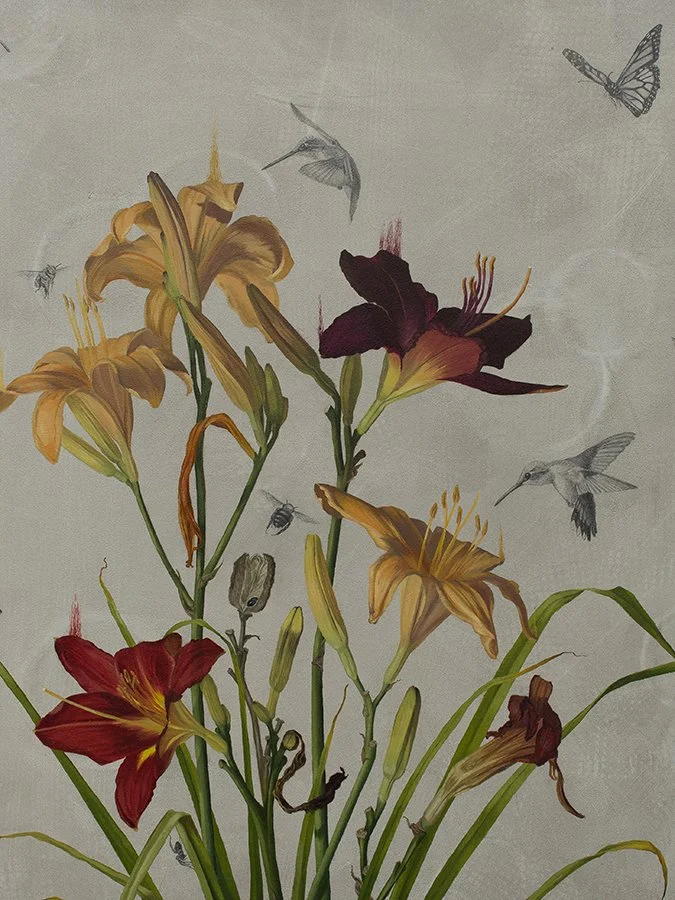
Detail of “In the Moment” 24x20 inch oil and graphite on panel, sold. Orange and maroon day lilies are visited by bees, ants, hummingbirds, and butterflies. Can you spot the spider?
Observing from Life
I’m a witness to this rhythm daily. When selecting blooms to paint, I follow their cycle from bud to bloom, painting one stem at a time, observing each stage as it unfolds. These paintings are not fast—because nature isn’t. They’re built from lived moments, layered with intention and presence.
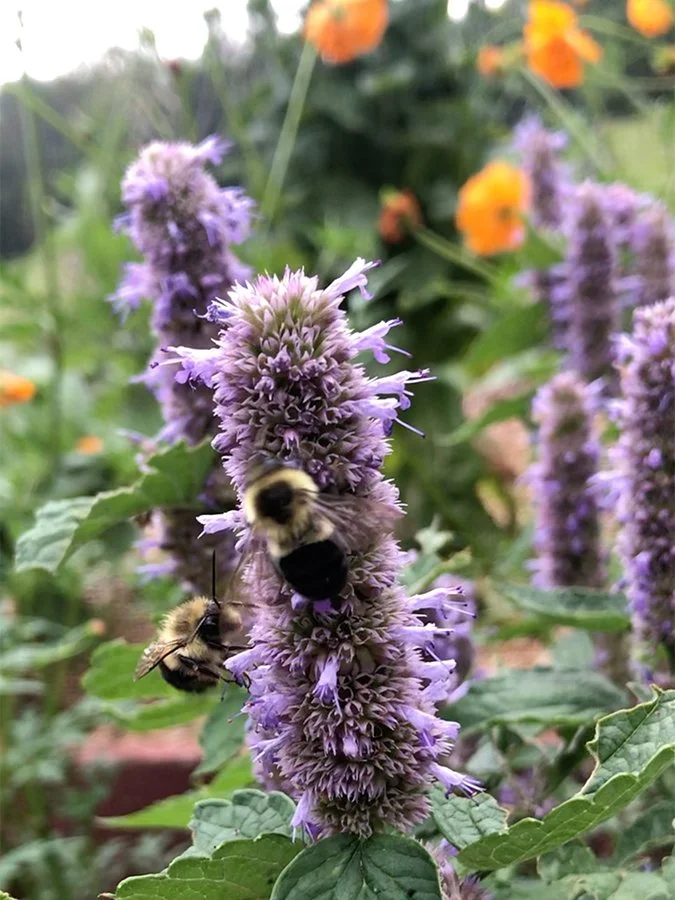
Bumble bees on anise hyssop in my pollinator-friendly garden. Herbs, flowers, fruits, and vegetables are interspersed with perennial native plants to support local insects.
The Power of the Gray
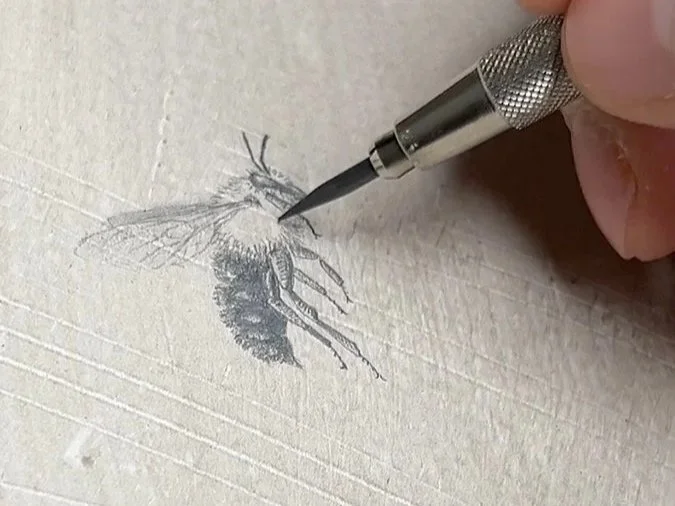
In my floral oil paintings, the blooms are the protagonists, rendered in luminous color. The insects and pollinators, however, appear differently—drawn directly on the panel in graphite. Without color, the viewer’s perception shifts from decorative to contemplative. Their grayed, softened presence is deliberate: they are secondary actors in the scene, yet essential to the story.
Insects and pollinators are meticulously drawn directly onto the panel using varying soft and hard graphites.
“Graphite gives them a voice without stealing the spotlight—soft, present, and unforgettable.” – Christine Mercer-Vernon
Pollinators at Risk
Pollinator populations—especially bees and butterflies—are declining worldwide due to habitat loss, pesticide exposure, disease, and climate disruption. This decline causes inconsistent pollination, reducing viable seeds, shrinking native plant populations, and threatening every system reliant on them, from wild landscapes to our food chain.
This cycle is no longer abstract to me—it’s personal. Each season I see fewer butterflies and fewer bees moving through the garden. A subtle but unmistakable quieting of the chorus. That loss sits with me every time I mix paint.
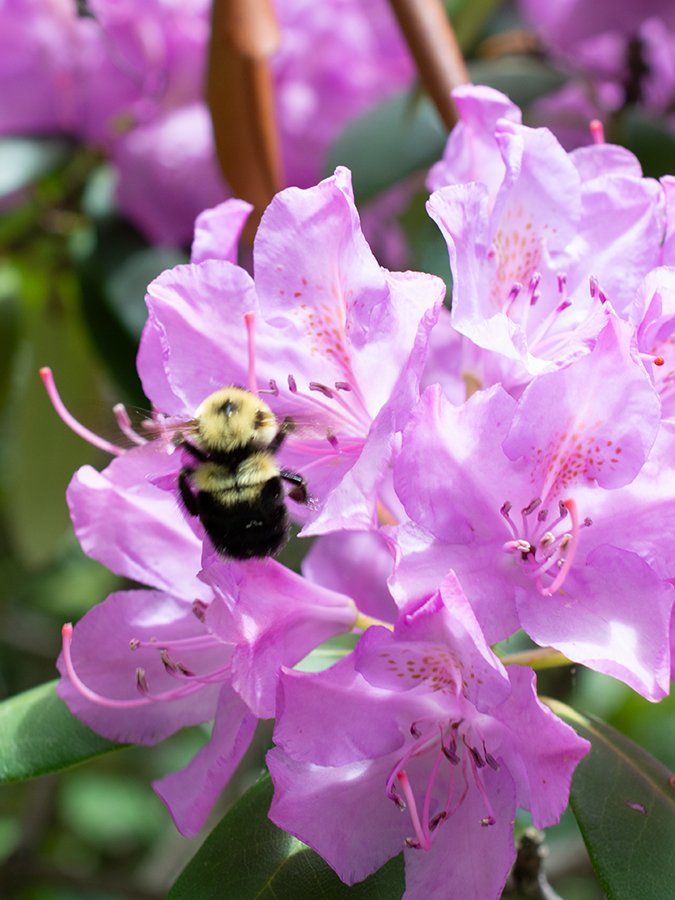
Native to Pennsylvania, rhododendrons put on a show of color that pollinators go crazy for. I am fortunate to have four, large, old growth rhododendrons around my home.
Small Changes
The solution begins locally. Pollinators depend on native plants for habitat and nourishment. Removing these species invites imbalance. Restoring even a handful of native perennials can rebuild the ecosystem they rely on. A dish of clean water, a native bloom allowed to seed, a corner left wild—small choices become seismic when multiplied across neighborhoods and generations.
My garden is built as a pollinator-friendly refuge: chemical-free, inclusive of native and regional flowers, water for insects and birds, and blooms left to feed wildlife as they cycle into seed. It’s a world that performs differently in morning, afternoon, and evening—but always in rhythm. And at dusk, I find the quiet moments that feed my work: solitary bumblebees nestled into blooms for their evening sleep, daddy long legs on one last hunt, crickets beginning their choral performance.
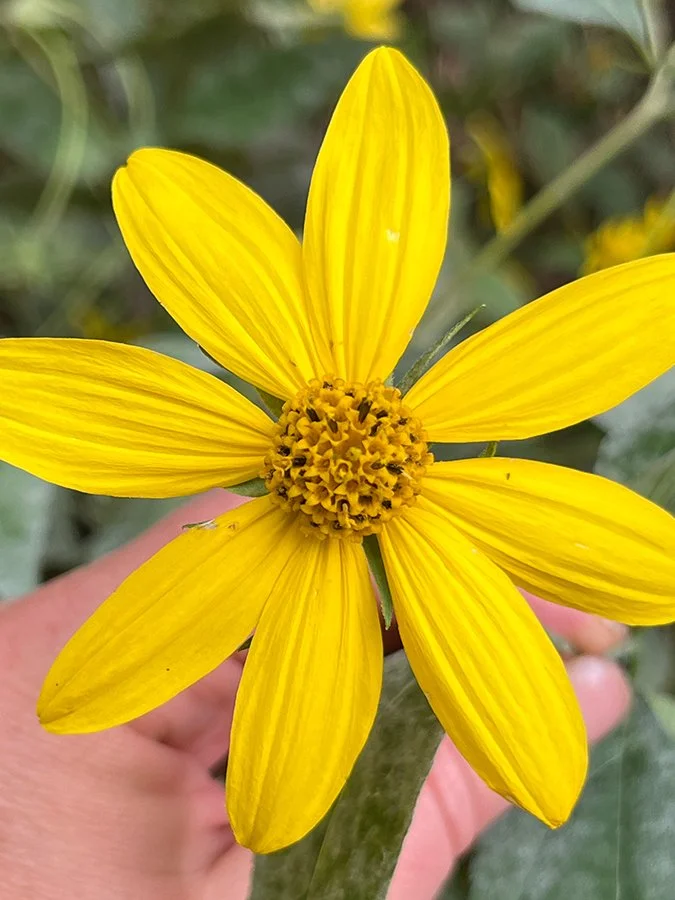
Hairy sunflower is local to my area and is one of my favorite perennial native plants.
From garden to artwork.
My process begins with a seed—grown and nurtured until vibrant blooms spring open and the show begins. This begins a conversation with my subject that includes quietly observing each stage of growth and the insects and pollinators that visit each flower.
A collapsing of time into one composition.
Explore my seed to artwork process→
________
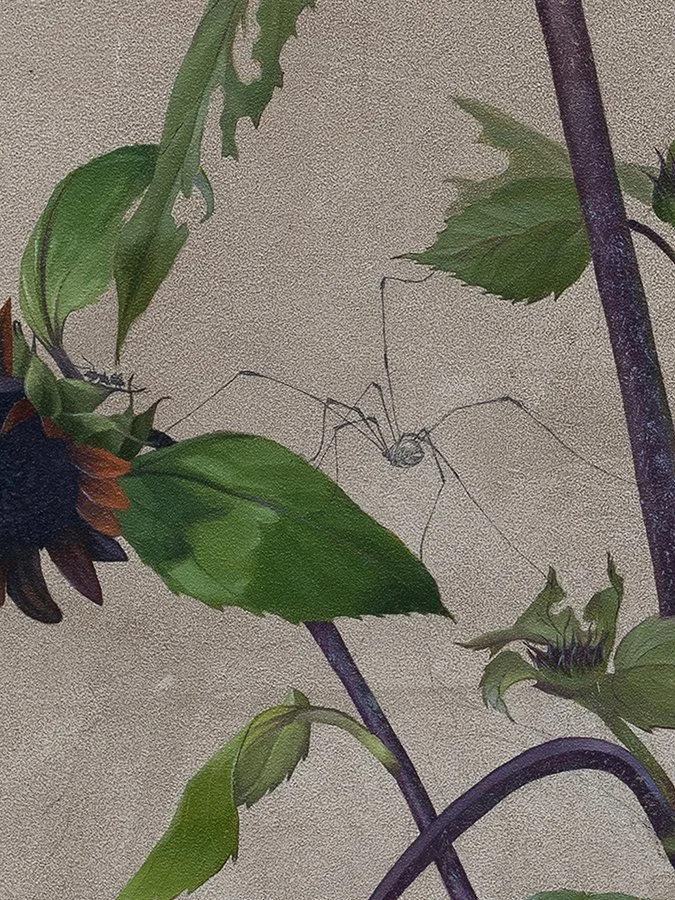
Detail of “Midday in the Garden” 24x20 inch oil and graphite on panel. A daddy long legs is intrigued by a nearby black ant.
________