Why I Draw and Paint Skulls and Bones
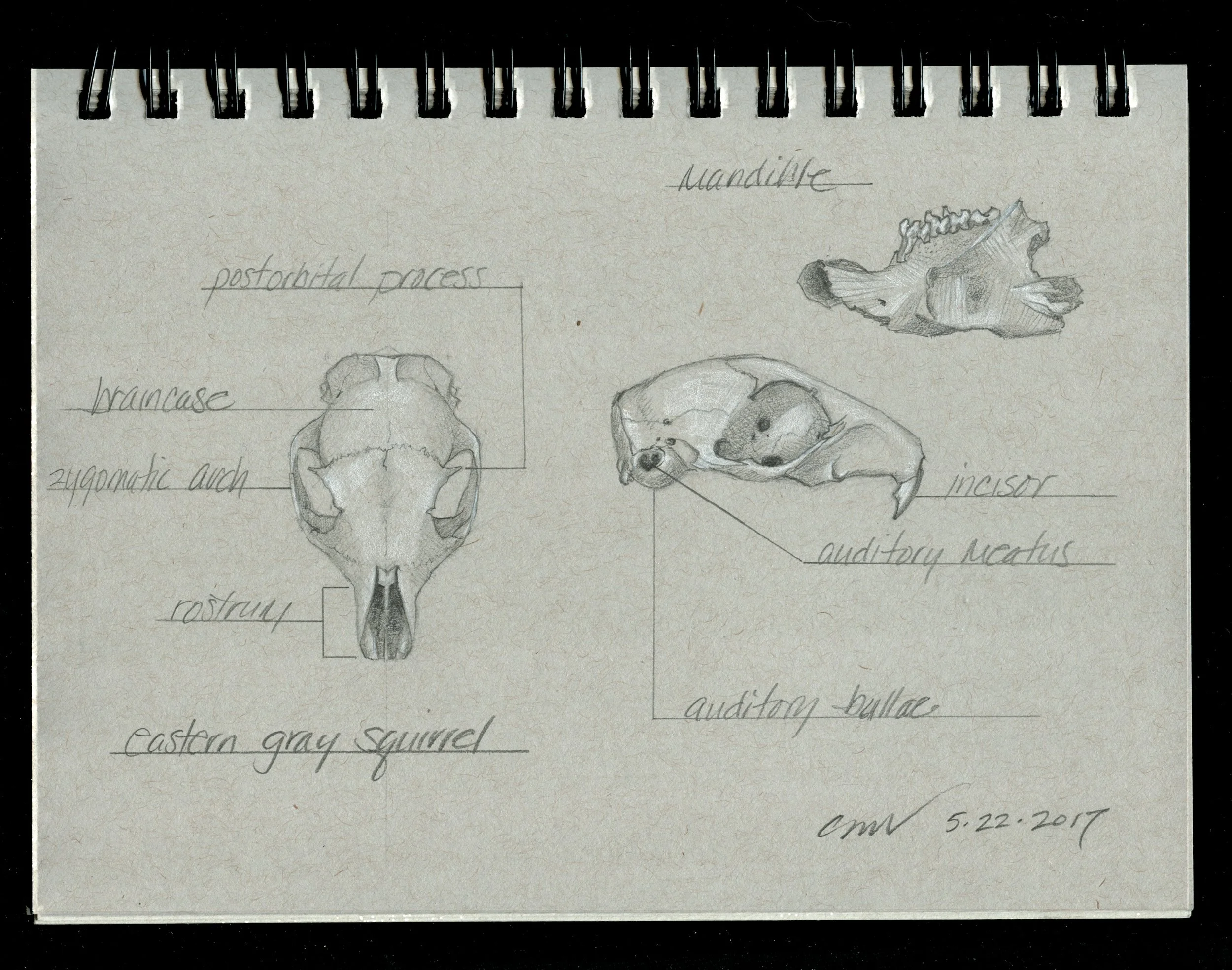
a page from my skull study sketch book
There are many polarizing opinions about skulls and bones. Some people feel they have dark or morbid undertones, but to me, they are just bones. Structures that live beneath the skin. An armature.
Every bone and skull is unique and when you examine them closely, you’ll find they are incredibly intricate and fascinating.
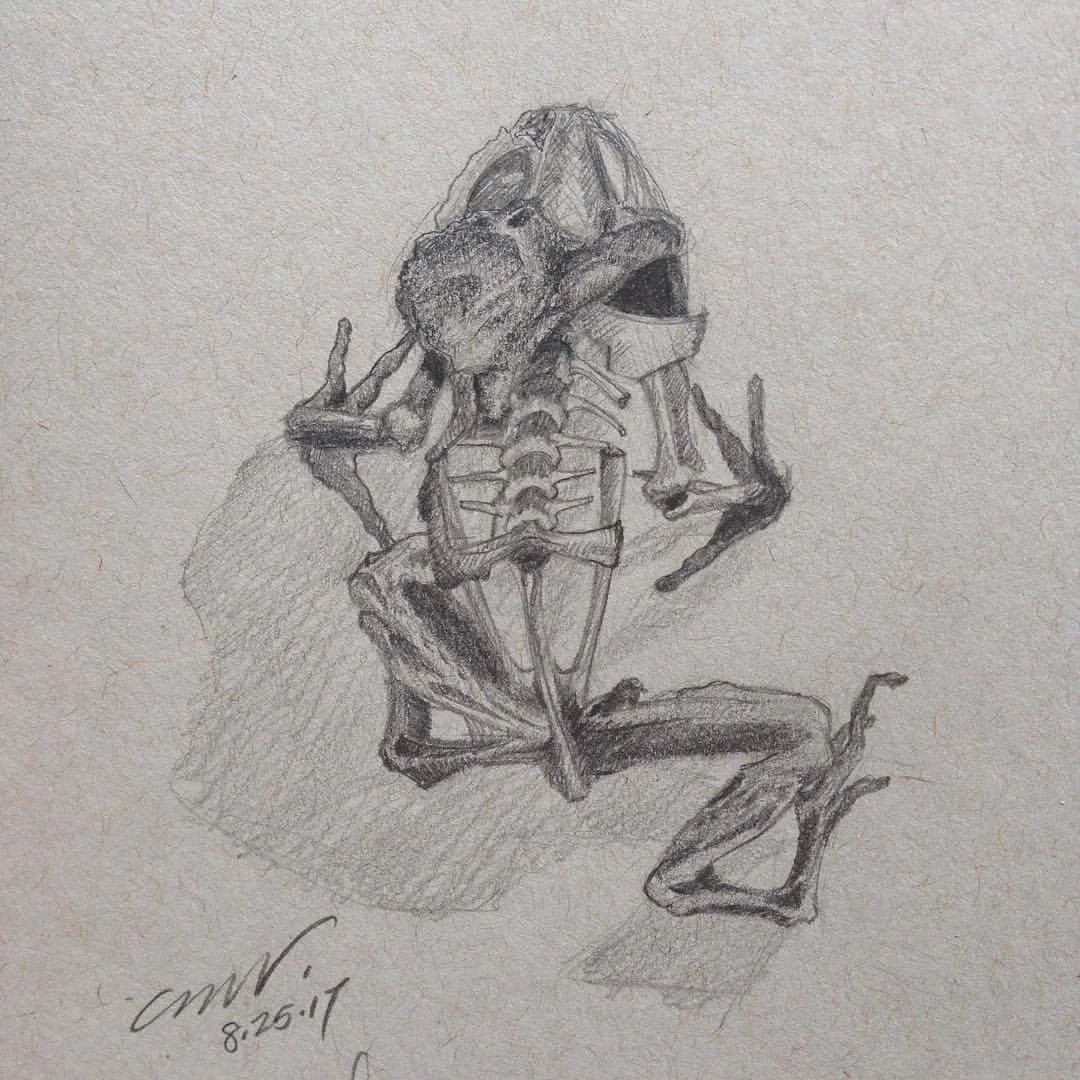
Sketchbook drawing of a toad skeleton I found in my garage
Why do I draw/paint skulls and bones?
Originally, I started drawing skulls when my daughter was young. I could set a skull on a shelf and work on drawings of it as time allowed. Initially, I didn’t have a great understanding of animal skull anatomy, so I dove headfirst into research and studying them for a better understanding of skull structure. This led to reading articles on Osteology, and I was fascinated by the amount of information that can be obtained from the scientific study of bones.
By analyzing and studying bones, visually and chemically, we can learn about the life of an animal or past human. From regional information—based on mineral content—to age, sex, afflictions and injuries. A capsule of information that gives us insight, allowing us to build a snapshot of how they lived, and possibly died.

Bones contain stories, therefore, I decided to tell stories with bones.
My work has always had an underlying theme exploring the cycle of life. Bones are a pausing point in that story, allowing me to reflect upon existence as a whole and consider death as a motivator for life versus an ending.
“do not be blinded by words” 16x16 inch oil on panel. A painting from The Skull Narratives, which is a collection of works that takes this concept further, exploring life, death, memory, and the human experience.
Explore the series →
Incorporating animal skulls and bones into my work allowed for a deeper symbolic exploration of the animal kingdom and our connection to it. Different cultures have assigned meanings and symbolisms to specific animals and regarded them with deep respect—worshipping them.

Skulls and bones themselves are works of art. I have skulls of animals that I will never stand face to face with, and quite honestly would be terrified to do so.
These Moose vertebra are massive. The weight alone of these three bones is not only surprising, but an eye-opening consideration of the immense weight the entire skeleton of this animal would weigh.
They’re also incredibly beautiful the way they fit together and the articulation with which they move.
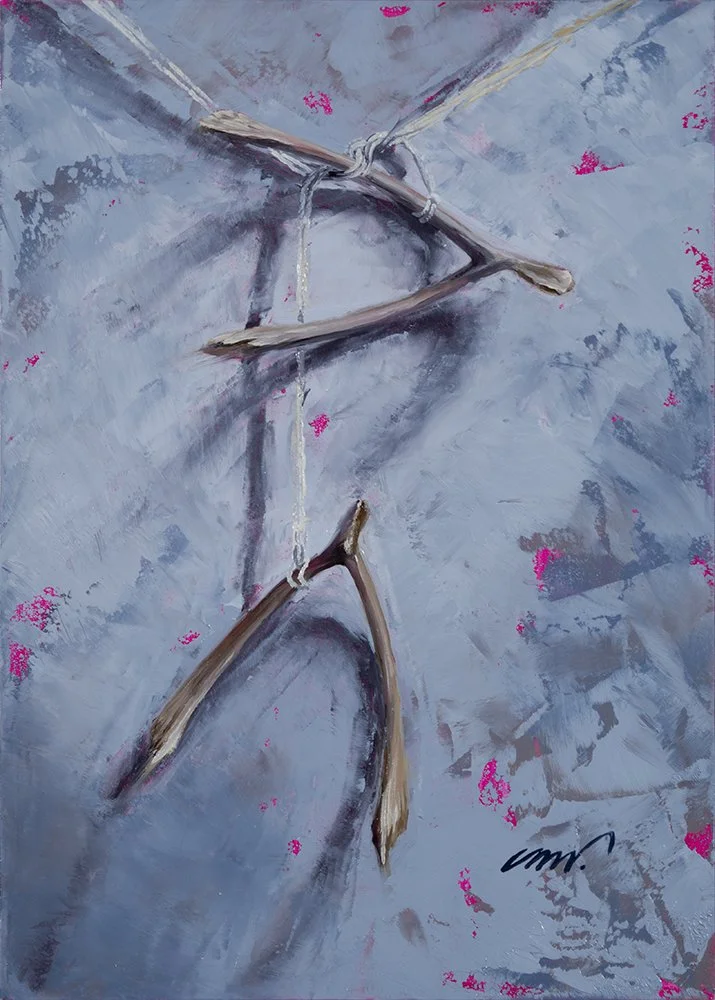
Exploring narrative
The first wishbone painting I created was simply something to paint but it grew into an entire series of minimalist works where a tiny bone became a symbol of hope, longing, and self-reflection.
Meaningful works that offered each viewer an opportunity to pause and make a wish.
Read my thoughts and intentions on this symbolic body of work →

Holding the skull of an animal, or human, in your hands, turning it over and examining each area inspires an appreciation for these mystical underlying structures.
Viewing up close allows me to study them, understand the structure, marvel at it's design, feel the weight, examine each terrifying tooth, and wonder endlessly about the life of the animal.
It’s a rabbit hole I willingly fall down. I try to imagine each animal and how it lived and if it ever crossed paths with a human—and sadly, how it died.
The more time I spend drawing and painting skulls and bones, the deeper the conversations with my subjects goes. Time spent contemplating impermanence, mortality, and death as a catalyst for meaningful living. Endless rabbit holes to fall down. If you’d like to fall deeper down the hole with me, there’s more to read about my skull and bone portraits here →
That same attention to impermanence runs through my garden paintings, where flowers are observed across their changing life cycle and reflections at the opposite end of the spectrum explore growth, renewal, and resilience. Explore Garden Flowers & Pollinators →
I have a great respect for each skull in my collection, which sits now around 145. I’ll never know most of their lives before they came to me, but I feel a stewardship over each one, to treat them with dignity and revere them as works of art.
Even though I have over 20 years studying them, there's always more to learn, and I'm fascinated by each new skull added to my ever-growing collection. They're all uniquely different, yet they all supported the same thing... life. We cannot have life without death, it's cyclical, it's essential, and it's eventual, it’s also the greatest motivator to live more fully.
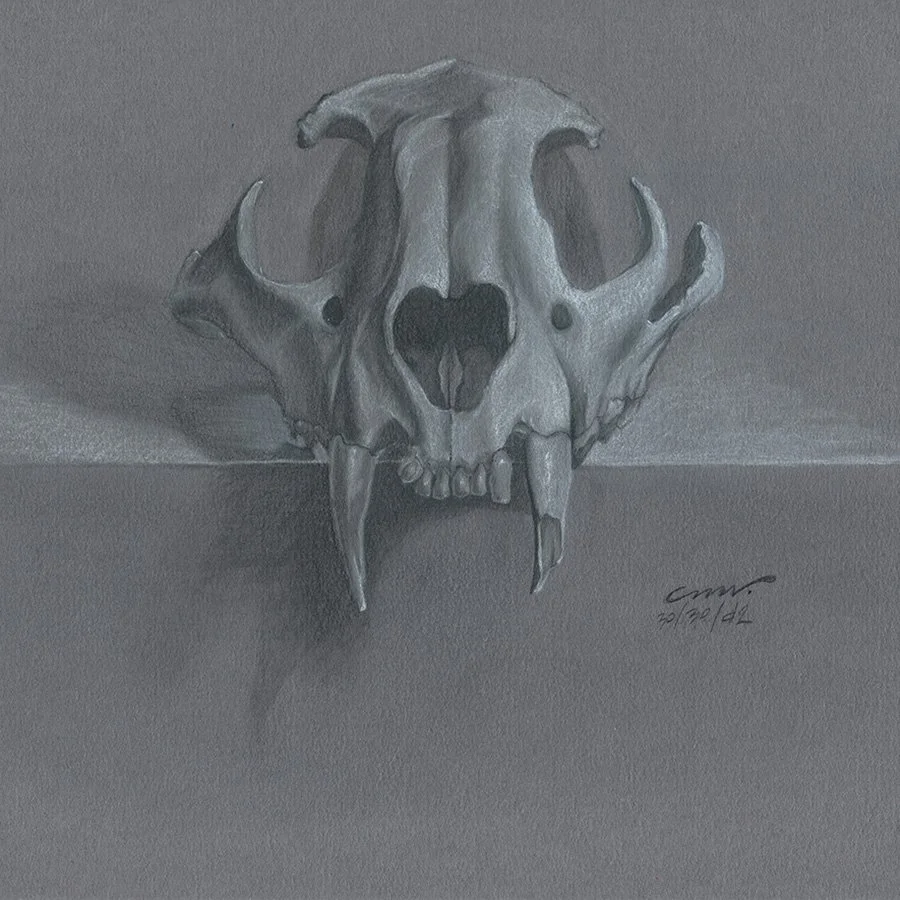
A leopard skull drawing from my 30 skulls in 30 days project. Explore the entire project and read my thoughts on it →